Maintenance Tips to Keep Your Jewelry Faceting Machine Running Smoothly
A jewelry faceting machine is a precision tool that transforms rough gemstones into accurately shaped and beautifully polished pieces. Unlike ordinary workshop equipment, a faceting machine depends on the harmony between its motor, spindle, cutting lap, angle adjustment system, and water circulation components. Even a small amount of wear or contamination can affect cutting accuracy and create inconsistencies in gemstone surfaces. Regular maintenance is therefore not just about extending jewelry faceting machine life; it is about protecting the quality of every stone that passes through the workshop.
One of the most important maintenance habits is keeping the machine clean after each use. During faceting, fine gemstone particles and polishing compounds can accumulate around the mast, dop holder, splash pan, and adjustment mechanisms. These tiny abrasive particles may gradually damage moving parts if they are left unattended. A soft brush or compressed air can be used to remove debris from hard-to-reach areas, while a clean cloth helps prevent moisture buildup on metal surfaces. Avoid using aggressive cleaners that may affect protective coatings or precision components.
The condition of the cutting laps deserves special attention. A worn or uneven lap can cause inaccurate facets and increase polishing time. Before starting a new project, inspect the lap surface for deep scratches, uneven wear, or contamination from previous stones. Diamond particles from one material may interfere with another gemstone, so separating laps for different tasks is a good practice. Proper storage of unused laps also prevents accidental damage and keeps their surfaces ready for precise work.
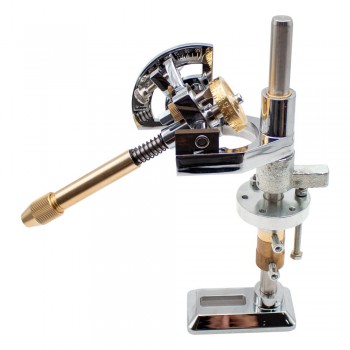
The lubrication of mechanical components is another key factor in maintaining smooth operation. The mast assembly, gears, bearings, and adjustment screws should move freely without excessive resistance. However, applying too much lubricant can attract dust and create a sticky surface that affects accuracy. Use only the recommended amount and choose lubricants suitable for precision machinery. Regular checks help identify unusual friction before it develops into a more expensive repair.
Water management is often overlooked but plays a major role in faceting performance. Many machines rely on water to cool the cutting area and remove grinding debris. Dirty water can carry abrasive particles back onto the lap, reducing cutting efficiency and damaging surfaces. The water reservoir should be emptied and cleaned frequently, especially after working with softer stones that create more residue. Checking hoses, pumps, and flow control systems also helps prevent interruptions during long faceting sessions.
Calibration should be part of a routine maintenance schedule. A faceting machine may appear to function normally while slowly losing accuracy due to small changes in alignment. Periodically checking the mast height, angle scale, index wheel, and dop alignment ensures that the machine continues to produce symmetrical facets. Accurate calibration is particularly important when creating complex designs that require repeated angle adjustments.
Electrical components should not be ignored either. Inspect power cords, switches, and motor connections for signs of wear or damage. If the machine uses speed control, make sure the adjustment responds smoothly without sudden changes. Unusual sounds, vibrations, or overheating from the motor should be investigated immediately rather than allowing the problem to worsen.
Finally, good maintenance includes careful operation habits. Avoid forcing stones against the lap with excessive pressure, as this increases stress on the motor and mechanical parts. Allow the machine to work at its designed speed and replace consumable parts before they become severely worn. Keeping a simple maintenance record can also help track cleaning schedules, part replacements, and performance changes over time.
A jewelry faceting machine represents a significant investment in precision craftsmanship. With consistent cleaning, proper lubrication, regular calibration, and thoughtful operation, the machine can remain reliable for many years. More importantly, careful maintenance allows jewelers to focus on creativity and accuracy instead of dealing with preventable equipment problems. A well-maintained faceting machine is not only a tool—it is a foundation for producing gemstones with exceptional quality and character.
Related Articles: https://blog.seniorennet.nl/jewelerstoolsmall/archief.php?ID=110074


Comments
Post a Comment