Key Components and Mechanisms of an Automatic Gem Faceting Machine
An automatic gem faceting machine is a remarkable fusion of precision engineering and craftsmanship, designed to transform rough stones into symmetrical, light-reflecting gems. While the artistry of faceting has traditionally relied on skilled hands, automation introduces repeatability and fine control that elevate both efficiency and consistency. Understanding how these machines work requires a closer look at their essential components and the mechanisms that coordinate them.
At the heart of the system lies the spindle and motor assembly. This unit drives the lap—the rotating disc coated with abrasive material used to cut and polish the stone. Unlike manual machines, automatic faceting systems often use digitally controlled motors that maintain stable speeds under varying loads. This ensures uniform material removal, even when working with harder gemstones such as sapphire or quartz.Equally important is the indexing mechanism, which determines the angular position of each facet. In automatic gem faceting machines, this is typically governed by a stepper motor or servo system linked to a digital controller. Instead of manually adjusting angles, the operator inputs parameters into a control interface, and the machine executes precise rotations. This eliminates cumulative human error and allows for complex designs that would be tedious to reproduce by hand.
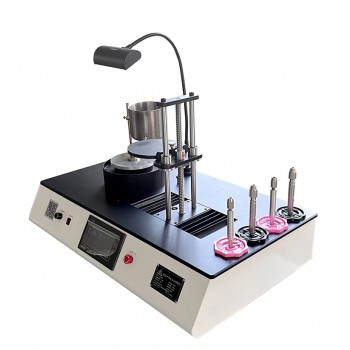
The mast and quill assembly provides vertical and angular positioning of the gemstone. The quill holds the dop stick, to which the stone is attached. Automated systems often incorporate linear actuators that move the quill with micrometer-level precision. This enables controlled depth cutting, ensuring that each facet reaches the exact plane required for optimal symmetry and brilliance.
Another critical element is the control unit or software interface. This is where automation truly distinguishes itself. Modern machines are often paired with software that allows users to design or import faceting diagrams. Parameters such as angle sequences, cutting depth, and polishing stages can be pre-programmed. Once initiated, the machine follows the sequence step by step, reducing the need for constant supervision.
Cooling and lubrication systems also play a subtle but essential role. During cutting, friction generates heat that can damage both the gemstone and the lap. Automated machines typically include drip systems or coolant feeds that maintain a stable temperature and remove debris from the cutting surface.
Finally, the feedback and calibration systems ensure accuracy over time. Sensors may monitor position, resistance, or vibration, allowing the machine to adjust in real time. This feedback loop is particularly valuable when working on high-value stones where even minor deviations can significantly impact the final result.
In essence, an automatic gem faceting machine replaces repetitive manual adjustments with coordinated mechanical precision. While it does not eliminate the need for design insight or material understanding, it reshapes the workflow—turning faceting into a process that is as much about programming and setup as it is about polishing and finish.
https://www.jewelerstoolsmall.com/goods-1945.html


Comments
Post a Comment