Safety Practices for Using Pneumatic Jewelry Engraving Machines
Pneumatic jewelry engraving machines have become essential tools in modern jewelry workshops. Known for their precision and power, these devices use compressed air to drive small engraving tools that can cut intricate designs into metal surfaces. While they greatly improve efficiency and artistic possibilities, they also require proper safety practices. Following appropriate precautions not only protects the operator but also ensures consistent engraving quality and longer machine life.
One of the most important safety considerations is maintaining a stable and organized workspace. A pneumatic jewelry engraving machine should always be placed on a solid workbench with sufficient lighting. Since jewelry engraving involves detailed work on small surfaces, poor lighting can cause mistakes or slips that may damage the piece or injure the operator. Keeping the workspace clean and free from loose tools, metal scraps, and dust also reduces the risk of accidents.
Personal protective equipment is equally important when operating pneumatic engraving tools. Safety glasses should always be worn to protect the eyes from small metal chips or debris produced during engraving. Some jewelers also use magnification visors, which not only improve accuracy but also help maintain a safer working distance from the rotating tool. In addition, lightweight gloves can protect the hands from minor cuts when handling sharp metal pieces.
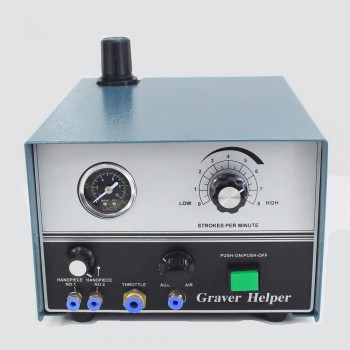
Proper handling of compressed air systems is another critical safety factor. Pneumatic engraving machines rely on air compressors and hoses to function. Before starting the machine, users should check that all hoses are securely connected and free from cracks or leaks. Air pressure should always be set according to the manufacturer's recommended range. Excessive pressure can cause the tool to behave unpredictably, while insufficient pressure may reduce engraving control.
Regular maintenance is also a key part of safe operation. Pneumatic engravers contain internal components that move rapidly during use. Over time, dust, oil residue, and metal particles can accumulate inside the system. Cleaning the tool and applying the recommended lubricant helps maintain smooth performance and prevents sudden mechanical failures. It is also advisable to periodically inspect the compressor, air filters, and moisture traps to ensure the air supply remains clean and stable.
Another often overlooked safety practice is proper posture and hand positioning. Engraving requires steady control, and fatigue can increase the chance of mistakes. Operators should sit comfortably with their forearms supported on the workbench to reduce strain. Taking short breaks during long engraving sessions helps maintain focus and prevents repetitive strain injuries.
Training and familiarity with the equipment are also essential. Beginners should practice on scrap metal before working on valuable jewelry pieces. Learning how the tool responds to different air pressures, engraving tips, and metal types allows users to develop better control and avoid accidents.
In conclusion, pneumatic jewelry engraving machines are powerful tools that combine precision with efficiency. However, their safe use depends on careful preparation, proper protective equipment, regular maintenance, and responsible operating habits. By following these safety practices, jewelers can protect themselves while producing high-quality engraved designs.
Related articles: https://blog.libero.it/wp/jewelerstoolsmall/2026/03/14/preventive-maintenance-for-automatic-gem-faceting-machines/


Comments
Post a Comment